Monetary Landscape 2026
In 2026, we are witnessing a "normalization" of interest rates following years of volatility. Unlike the near-zero environments of the early 2020s, current federal benchmarks have stabilized, allowing high-yield savings accounts (HYSAs) to remain a viable tool for short-term goals. For the modern saver, the focus has shifted from simply "saving" to "arbitrage"—finding the gap where your money grows faster than the cost of bread and fuel.
Practical examples abound: A balance of $10,000 in a 0.01% traditional savings account loses roughly $300 in purchasing power annually at today’s 3% inflation. Conversely, the same amount in a top-tier HYSA can yield a net gain in real terms. Current data shows that while the national average savings rate sits at a meager 0.59% APY, elite digital banks are maintaining rates above 4.20%, creating a significant spread for proactive investors.
The Real Rate of Return
To understand 2026's yield, you must subtract the Consumer Price Index (CPI) from your APY. If Axos Bank offers 4.21% and inflation is 3.1%, your real return is 1.11%. While this sounds modest, it represents the difference between growing your wealth and watching it evaporate. In the current fiscal climate, any positive real rate is a victory for liquid assets.
Digital Banking Dominance
Brands like Ally Bank and SoFi have redefined expectations by eliminating monthly maintenance fees and minimum balance requirements. Their overhead is lower than brick-and-mortar institutions like Chase or Bank of America, allowing them to pass higher yields directly to the consumer. This isn't just a trend; it's a structural shift in the banking industry that favors the agile saver.
The Role of Compound Interest
Frequency of compounding matters. In 2026, the standard for top-tier accounts is daily compounding with monthly crediting. On a $50,000 emergency fund, the difference between monthly and annual compounding at 4.00% APY might seem small over 12 months, but over a three-year horizon, it accounts for hundreds of dollars in "free" capital growth.
Impact of Fed Rate Cuts
As the Federal Reserve eyes potential adjustments later this year, HYSAs remain variable. Unlike a Certificate of Deposit (CD), your HYSA rate can drop overnight. Analysts at Bankrate predict a gradual downward slide toward 3.70% by year-end 2026. This makes the timing of account opening and the choice of a "high-beta" bank—one that is slow to lower rates—crucial for maximizing yield.
Psychology of the "Safety Net"
Beyond the numbers, 2026 has seen a psychological shift. With market volatility in the tech sector, many high-net-worth individuals are moving larger portions of their portfolios into FDIC-insured high-yield accounts. The peace of mind provided by a liquid, 4%+ return is currently outweighing the risk-premium of aggressive equity positions for many conservative portfolios.
The Inflation Squeeze
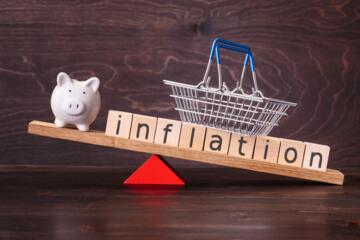
The primary pain point today is "Inflation Lag." Banks are often quick to raise rates when the Fed moves, but they are equally quick to slash them when the economy cools. Many savers are stuck in "zombie accounts" at large institutions, earning 0.10% while inflation eats 3% of their value. This results in a "stealth tax" on the financially inactive.
Furthermore, many "high-yield" claims are marketing traps. Some banks require a $100,000 minimum to unlock the top tier, or they bundle the rate with mandatory direct deposits and debit card swipes. Real-world situations show that users often end up with an effective APY much lower than the advertised headline rate due to these hidden hurdles.
Strategic Yield Selection
To stay ahead, you need to look beyond the headline number. Check the "APY history" of a bank. Institutions like Marcus by Goldman Sachs or American Express National Bank might not always have the absolute highest rate on Day 1, but they are known for "yield consistency"—keeping their rates in the top decile for years rather than using "teaser rates" that drop after 90 days.
For those with significant cash reserves, 2026 is the year of the "Multi-Bank Strategy." By spreading funds across Newtek Bank (currently 4.20% APY) and CIT Bank (4.10% for balances over $5,000), you can maximize FDIC insurance limits ($250,000 per institution) while staying liquid. Diversification isn't just for stocks; it’s for liquidity management too.
Utilizing "buckets" or "vaults" (features offered by Ally and SoFi) allows you to mentally and digitally separate your emergency fund from your house down payment. This organizational layer, combined with automated transfers, ensures that your savings strategy is "set and forget," which is the only way most people successfully outpace inflation over the long haul.
Comparative Market Tiers
A mid-career professional recently moved $80,000 from a traditional Wells Fargo savings account (0.01% APY) to a high-yield account at Poppy Bank (4.00% APY). In the traditional account, they were earning $8 a year. After the switch, their annual interest jumped to $3,200. This $3,192 difference covered their entire annual grocery price increase, effectively "nullifying" inflation for their household.
Another case involves a small business owner using a Mercury or Bluevine high-yield business account. By keeping their $200,000 operating capital in a 4.0% yield environment rather than a 0% business checking account, they generated $8,000 in additional revenue—enough to fund a part-time administrative assistant for several months, proving that yield is an operational lever.
2026 Savings Benchmark
| Institution | Estimated APY | Minimum for Top Rate | Best Feature |
|---|---|---|---|
| Newtek Bank | 4.20% | $0 | Pure Yield Leadership |
| CIT Bank (Platinum) | 4.10% | $5,000 | Stable Large-Balance Growth |
| SoFi Bank | Up to 4.00% | Direct Deposit Req. | All-in-One Ecosystem |
| Capital One 360 | 3.10% - 3.40% | $0 | Physical Branch Access |
| National Average | 0.59% | Varies | N/A (Avoid for growth) |
Common Savings Pitfalls
The "Set and Forget" trap is dangerous in a 2026 environment. Because rates are variable, an account that was a market leader in January might be lagging by July. I recommend a "Quarterly Yield Audit." If your bank has dropped more than 0.50% below the top-tier competitors, it’s time to move. Digital transfers take only 1-3 business days, making loyalty expensive and unnecessary.
Another mistake is ignoring the "Real Return" after taxes. Remember that interest earned is taxable income. If you are in the 24% tax bracket, a 4% APY is actually a 3.04% after-tax return. If inflation is also 3%, you are essentially breaking even. For higher-bracket earners, 2026 may require looking into tax-equivalent yields like Municipal Money Market funds or I-Bonds (currently at 4.26%) for a portion of their cash.
FAQ
Is my money safe in online-only banks?
Yes, provided they are FDIC-insured. In the event of a bank failure, the Federal Deposit Insurance Corporation protects up to $250,000 per depositor, per institution. Always verify the bank's "FDIC Certificate Number" before depositing.
Will high-yield rates stay above 4% in 2026?
While some elite banks may maintain 4%+, the general market trend is slightly downward. Most analysts expect a range of 3.50% to 3.85% for the majority of top-tier HYSAs by the end of 2026 as the Fed moderates its stance.
How does a Money Market Account (MMA) differ from a HYSA?
MMAs often come with check-writing abilities and a debit card, offering slightly more liquidity. In 2026, the rates between HYSAs and MMAs are nearly identical, so choose based on whether you need direct access to the funds via ATM or check.
Can inflation actually be higher than the CPI?
Yes. The Consumer Price Index is a broad "basket." If your personal spending is heavily weighted toward categories like healthcare or education—which are rising faster than 3% in 2026—your "personal inflation rate" might be higher than the national average.
Are I-Bonds a better alternative to HYSAs?
I-Bonds are currently offering 4.26%, but they have a 1-year lock-in period and a 3-month interest penalty if cashed before 5 years. Use HYSAs for "emergency" liquidity and I-Bonds for "stable" 1-2 year savings goals.
Author’s Insight
I’ve tracked interest rate cycles for nearly two decades, and 2026 is unique because the "information gap" has closed. In the past, banks could hide behind low rates because moving money was hard. Today, with fintech bridges and instant transfers, there is no excuse for earning less than 3.5%. My personal rule of thumb: if your bank isn't paying you at least 1% above the current CPI, they aren't your partner—they are a storage locker. Don't be afraid to be a "rate mercenary." Your future purchasing power depends on your willingness to move your capital to where it is treated best.
Conclusion
Navigating 2026 requires a proactive approach to cash management where APY analysis is balanced against current inflation data. By selecting institutions like Newtek or CIT and avoiding the stagnant rates of "Big Four" banks, you can ensure your liquid reserves are working as hard as your investments. The actionable advice for this quarter: calculate your real rate of return today, and if it's negative or near-zero, migrate your funds to a high-yield environment immediately to stop the silent erosion of your wealth.